
Saskatchewan Municipal Board
The Saskatchewan Municipal Board (SMB) is an administrative tribunal established for regulatory and quasi-judicial purposes in dealing with issues from local authorities.
Additionally, the SMB serves as the Board of Revenue Commissioners (BRC). The BRC is responsible to hear and decide appeals on taxes assessed by the province and considers requests for write-offs and cancellations of debt owing to the province.
1. Information you might be looking for
The Saskatchewan Municipal Board has several committees to hear and decide appeals, which include:
- Assessment Appeals Committee;
- Fire Prevention Appeals Committee;
- Local Government Committee;
- Municipal Boundary Committee;
- Planning Appeals Committee;
- Road Maintenance Agreement Committee; and
- Weed Control Appeals Committee.
Additionally, the SMB hears and decide appeals on taxes assessed by the province and approves write-offs and cancellations of debt owing to the province.
- Board of Revenue Commissioners
File an Assessment Appeal
The Assessment Appeals Committee hears and decides appeals:
- from a decision made by a board of revision;
- that were refused, omitted or neglected to be heard by a board of revision;
- that involve a commercial or industrial property with an assessed value of more than $1M; or
- where an owner has multiple properties in multiple municipalities.
File an Appeal Regarding Provincial Taxes
The Board of Revenue Commissioners hears and decides appeals on taxes assessed by the province involving:
- provincial sales taxes;
- consumption taxes;
- Crown mineral taxes; and
- mineral rights taxes.
File a Fire Prevention Appeal
The Fire Prevention Appeals Committee hears and decides appeals from:
- orders from a provincial fire inspector to fix a property's condition that doesn't meet the standards in The Fire Safety Act;
- unreasonable costs charged to a person as a result of the Fire Commissioner fixing the condition of a property that doesn't meet the standards in The Fire Safety Act; and
- decisions from the Fire Commissioner about a property's condition that doesn't meet the standards in the National Fire Code.
Apply for a Municipal Boundary Review
The Municipal Boundary Committee reviews applications for municipal boundary changes when there is a disagreement over the change or amalgamation.
File a Planning Appeal
The Planning Appeals Committee hears and decides appeals from:
- decisions made by a district planning authority;
- decisions made by a development appeals board;
- decisions made about a proposed subdivision;
- decisions made by a development officer in the Northern Saskatchewan Administrative District;
- requests made by a council for the payment of a development levy;
- when the municipality and a party fail to enter into a development levy or servicing agreement; or
- when a council fails to approve drawings or enter into a development agreement for direct control districts.
File a Road Maintenance Agreement Appeal
The Road Maintenance Agreement Committee hears and decides road maintenance agreement issues involving:
- whether an agreement is required; or
- the terms included in the agreement.
File a Weed Control Appeal
The Weed Control Appeals Committee hears and decides appeals from decisions made by a municipality about weed control orders.
2. Programs and services
Municipalities and local authorities requiring approval to start projects or enter into financing arrangements will make application to the Local Government Committee (LGC). These include:
- local improvements;
- utility rates;
- borrowing; and
- debt limits.
Apply to Begin a Local Improvement
Municipalities require approval from the LGC to start a local improvement project.
Apply for Approval of Water and Sewer Rates
Municipalities and public utility boards require approval for the following (which come into effect only after approval is given):
- rates (including bulk water rates);
- charges;
- tolls;
- rents;
- discounts; and
- additional amounts or percentages for water and sewer services.
Apply to Borrow Money
Municipalities and local authorities may require approval from the LGC to borrow money to fund projects or operations, or guarantee the loan of a controlled corporation. Also, public utility boards may require approval to borrow money to pay for operating costs.
Apply to Establish a Debt Limit
Cities may apply to have a debt limit established. The LGC recommends a city have an established debt limit in order to avoid the requirement for approval of every borrowing it undertakes. A city's debt limit is determined by its own source revenues from the previous year.
Newly updated legislation allows for municipalities other than cities to apply to the LGC to establish a debt limit that exceeds their own source revenues from the previous year. Municipalities interested in establishing a debt limit should consult with the LGC to determine the anticipated benefits.
Establishing a debt limit will allow a municipality to borrow money for a term of over three years without approval from the LGC. However, if the municipality would like to borrow or guarantee money in excess of its debt limit, approval would be required for the additional amount.
Apply to Invest Surplus Municipal Funds
Municipalities may invest surplus money in:
- Government of Canada Bonds;
- Guaranteed Investment Certificates;
- Saskatchewan municipal securities;
- Saskatchewan school division securities; and
- deposit certificates.
Any other type of investment may require approval from the LGC.
3. Ministers and managers
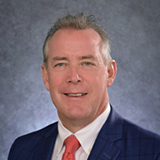
Hon. Don McMorris, Minister
Minister's Office
| Phone | 306-787-6100 |
|---|---|
| Fax | 306-787-0399 |
| minister.gr@gov.sk.ca | |
| Mailing Address | Room 306, 2405 Legislative Drive, Regina, SK |
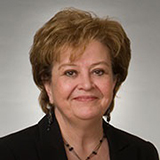
Hon. Donna Harpauer, Minister
Minister's Office
| Phone | 306-787-6060 |
|---|---|
| fin.minister@gov.sk.ca | |
| Mailing Address | Room 312, 2405 Legislative Drive, Regina, SK, S4S 0B3 |
4. Forms and publications
Decisions
Town of White City v Rural Municipality of Edenwold No. 158
Policy and Procedures
Annual Reports
5. Legislation
The Municipal Board Act provides authority to the Saskatchewan Municipal Board (SMB).
Other legislation that guides the SMB includes:
- The Assessment Management Agency Act
- The Cities Act
- The Conservation and Development Act
- The Crown Minerals Act
- The Fire Safety Act
- The Global Transportation Hub Authority Act
- The Local Improvements Act, 1993
- The Meewasin Valley Authority Act
- The Mineral Taxation Act, 1983
- The Municipalities Act
- The Northern Municipalities Act, 2010
- The Planning and Development Act, 2007
- The Revenue and Financial Services Act
- The Watershed Associations Act
- The Weed Control Act
- The Cities Regulations
- The Conservation and Development Regulations
- The Fire Safety Regulations
- The Coal Disposition Regulations
- The Mineral Trust Revestiture Regulations
- The Weyburn Unit CO2 Crown Oil Royalty Regulations
- The Totnes Viking Gas Storage Royalty Regulations
- The Mineral Tenure Registry Regulations
- The Crown Oil and Gas Royalty Regulations
- The Crown Mineral Royalty Regulations
- The Subsurface Mineral Tenure Regulations
- The Oil and Gas Tenure Registry Regulations
- The Subsurface Mineral Royalty Regulations
- The Global Transportation Hub Authority Regulations
- The Local Improvements Forms Regulations
- The Sodium Chloride Production Tax Regulations
- The Potash Production Tax Regulations
- The Mineral Rights Tax Regulations
- The Freehold Coal Production Tax Regulations
- The Municipalities Regulations
- The Northern Municipalities Regulations
- The Dedicated Lands Regulations
- The Subdivision Regulations
- The Statements of Provincial Interest Regulations
- The Public Employees Benefits Agency Regulations
- The Revenue Collection Administration Regulations
- The Direct Agent Tax Remission (1992) Regulations
- The Weed Control Regulations